ISO 9001:2015 • PED 2014/68/EU (CE Marking)
ENGINEERING BLOG • FOUNDRY & CNC KNOWLEDGE BASE

Engineer Blog & Technical Knowledge Hub

In-depth technical publications, design for manufacturing (DFM) guidelines, tooling engineering, and metallurgical whitepapers written by PT ZAP foundry, machining, and metrology engineers in Indonesia.

#InvestmentCasting #5AxisCNC #ToolingMolds #ElectroPolishing #3DMetrology #ISO13485 #IndonesiaManufacturing
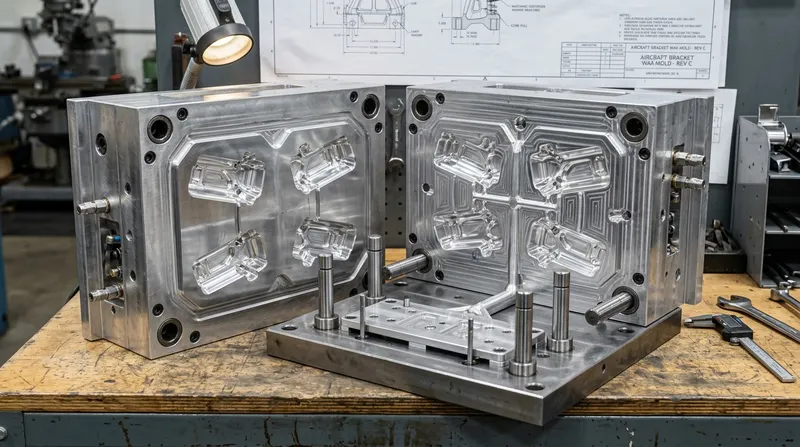
What Is Tooling In Investment Castings? Wax-Injection Dies & Mold Engineering
Casting Fundamentals
6 min read November 2021 / Updated 2026

What Is Tooling In Investment Castings? Wax-Injection Dies & Mold Engineering

Understanding aluminum and steel wax-injection tooling, shrinkage allowance calculations, and multi-cavity automated molds.

Tooling is the foundational stage of investment casting. CNC machined from aerospace-grade aluminum or tool steel, the mold creates precise disposable wax replicas with exact shrinkage compensation.

Key Engineering Specs:
  • CNC-machined 6061-T6 aluminum or H13 hardened tool steel cavities
  • Shrinkage factor calculation: 1.5% - 2.5% volumetric contraction compensation
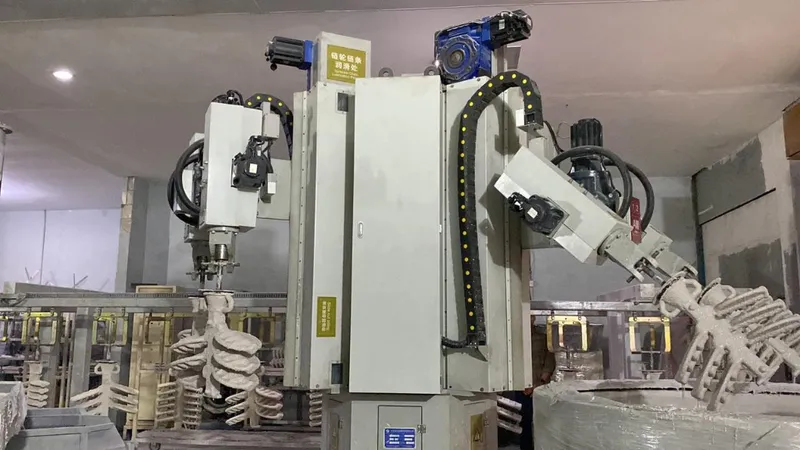
Preparing Ceramic Shells for Lost-Wax Casting: Slurry Dipping & Robotic Stucco
Robotic Shelling
7 min read September 2021 / Updated 2026

Preparing Ceramic Shells for Lost-Wax Casting: Slurry Dipping & Robotic Stucco

How robotic dipping in colloidal silica and fused silica sand creates high-strength refractory ceramic molds resistant to 1650°C molten alloy.

The ceramic shell molds molten metal at extreme temperatures. PT ZAP employs a 6-to-8 layer automated robotic dipping process using premium colloidal silica slurries and graded fused silica refractory sands.

Key Engineering Specs:
  • Automated 6-axis robotic dipping arms ensure 100% slurry coat consistency
  • Zircon flour primary face coat creates ultra-smooth cast surface roughness (Ra 3.2 µm)
Investment Casting vs Sand Casting: Engineering, Tolerance & Cost Analysis
Process Comparison
8 min read November 2020 / Updated 2026

Investment Casting vs Sand Casting: Engineering, Tolerance & Cost Analysis

Why OEMs switch to lost-wax investment casting to eliminate secondary machining, achieve ISO 8062 CT4-CT6 tolerances, and cast complex thin-wall geometries.

While sand casting is suitable for large, simple raw castings, investment casting offers near-net shape accuracy, superior surface finish (Ra 3.2 µm vs Ra 12.5 µm), and thin walls down to 1.5 mm, saving up to 40% in total machining costs.

Key Engineering Specs:
  • Linear tolerance comparison: ISO 8062 CT4-CT6 (Investment) vs CT10-CT12 (Sand Casting)
  • Surface finish: Ra 3.2 - 6.3 µm (Investment) vs Ra 12.5 - 25 µm (Sand)
What is ElectroPolishing (EP)? Passivation & Ra < 0.4 µm Finish for Stainless Castings
Surface Chemistry
6 min read August 2021 / Updated 2026

What is ElectroPolishing (EP)? Passivation & Ra < 0.4 µm Finish for Stainless Castings

Electrochemical dissolution of microscopic peaks for mirror surface smoothness, extreme corrosion resistance, and 3-A / EHEDG / ISO 13485 compliance.

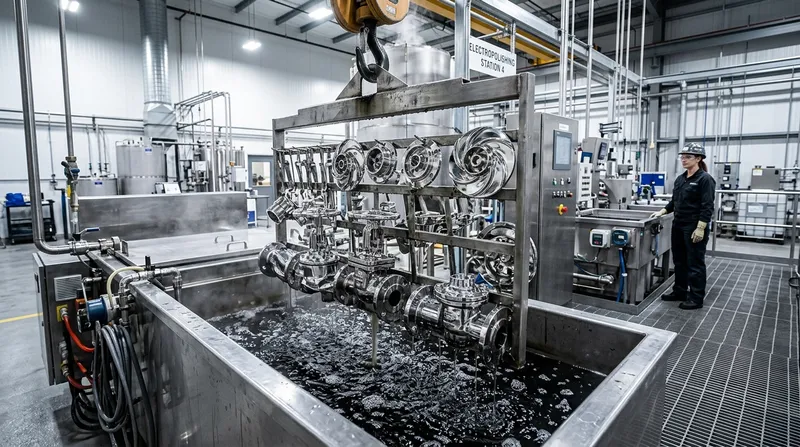
ElectroPolishing is an electrochemical process that removes micro-burrs and microscopic high points from stainless steel castings (CF8, CF8M, Duplex, Titanium), enriching the surface with chromium oxide (Cr2O3) to achieve Ra < 0.4 µm.

Key Engineering Specs:
  • Reduces surface roughness down to Ra < 0.4 µm (16 µin) for food & medical cleanliness
  • Enhances Chromium-to-Iron ratio (Cr/Fe > 1.5) for extreme pitting corrosion resistance
CAD/CAM Simulation & 5-Axis CNC Machining in Modern Foundry Operations
CNC Machining
7 min read December 2020 / Updated 2026

CAD/CAM Simulation & 5-Axis CNC Machining in Modern Foundry Operations

How PT ZAP integrates 5-Axis DMG MORI and Swiss turning centers with casting operations to supply 100% turnkey finished components directly to assembly lines.

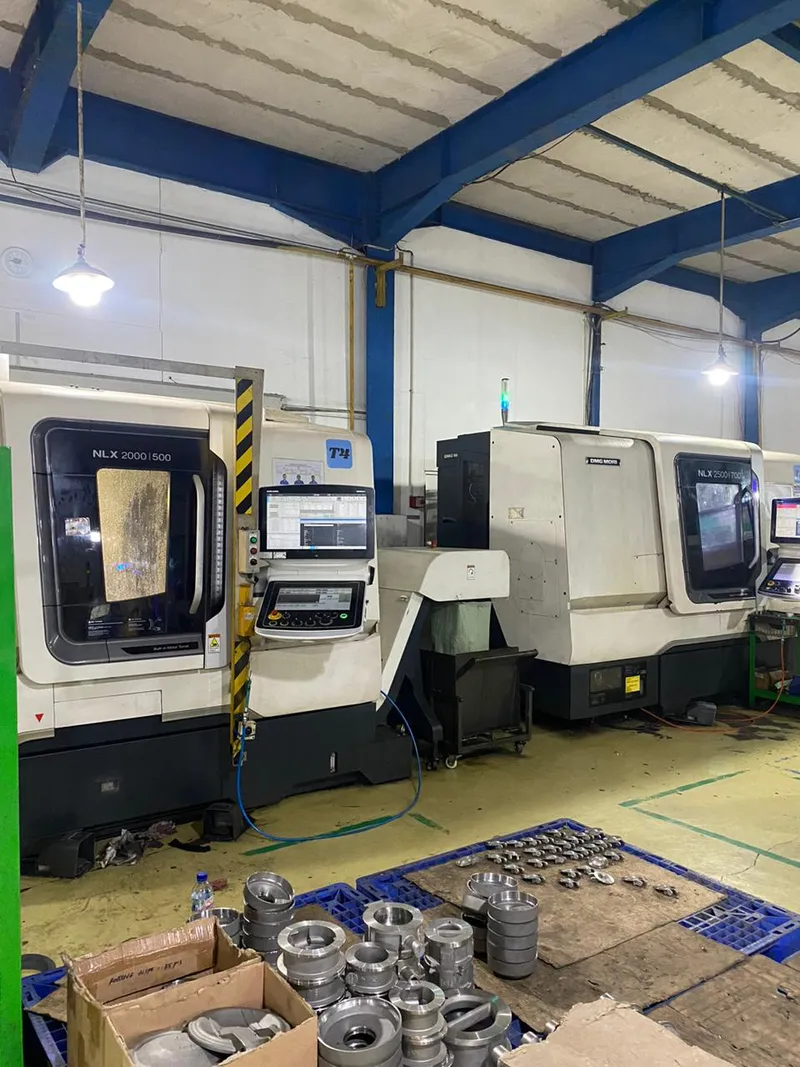
Casting without high-precision machining is only half the solution. PT ZAP operates an in-house fleet of 30 CNC machine units, including 5-Axis DMG Mori DMU 50 and Citizen Swiss lathes, ensuring tight ±0.005 mm tolerances.

Key Engineering Specs:
  • Fleet of 30 CNC machines: 5-Axis DMG Mori, HMCs, VMCs, and Citizen Swiss lathes
  • Integrated CAD/CAM virtual toolpath simulation eliminates gouging and machining errors
3D CMM & Optical Metrology (Mitutoyo & ZEISS) in Precision Casting Quality Assurance
Metrology & QA
6 min read February 2021 / Updated 2026

3D CMM & Optical Metrology (Mitutoyo & ZEISS) in Precision Casting Quality Assurance

How coordinate measuring machines and optical surface scanners verify GD&T, true position, and CAD-to-part compliance for zero-defect production.

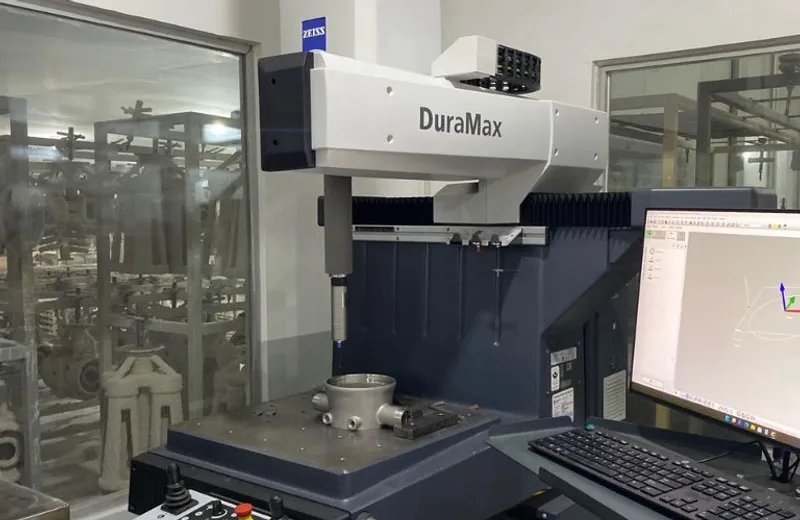
PT ZAP guarantees 100% dimensional compliance using high-precision CNC Mitutoyo 3D Coordinate Measuring Machines (CMM) and ZEISS optical scanning systems for complete GD&T verification and EN 10204 3.1 inspection certification.

Key Engineering Specs:
  • Mitutoyo 3D CNC CMM with scanning probe accuracy down to 1.7 µm
  • ZEISS optical 3D surface scanning with CAD-to-part color variance map overlay
Precision Investment Casting for Medical Implants (ZENMED+ & ISO 13485)
Medical Division
7 min read November 2018 / Updated 2026

Precision Investment Casting for Medical Implants (ZENMED+ & ISO 13485)

Manufacturing medical-grade titanium and 316L stainless steel orthopedic trauma plates, spine fixation systems, and surgical tools in Indonesia.

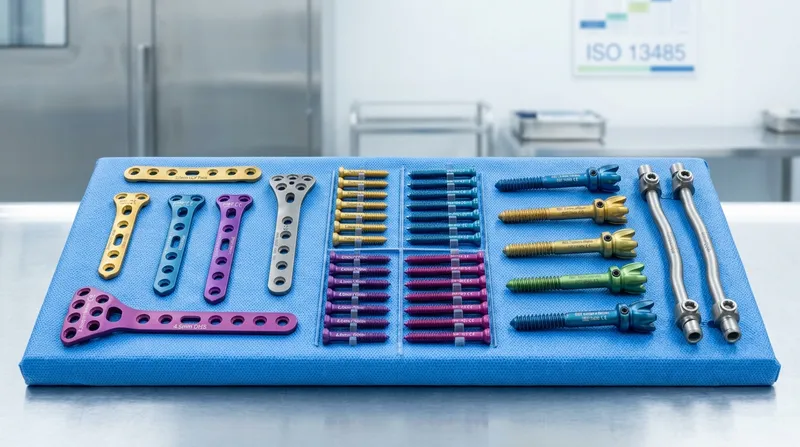
Through its dedicated ZENMED+ division, PT ZAP produces ISO 13485 certified orthopedic trauma implants, bone screws, and spine fixation hardware, combining vacuum metallurgy, 5-axis Swiss machining, and cleanroom packaging.

Key Engineering Specs:
  • ISO 13485:2016 Certified Medical Device Quality Management System
  • Certified medical implant alloys: ASTM F136 Ti-6Al-4V ELI & ASTM F138 316LVM
Non-Destructive Testing (NDT) in Lost-Wax Casting: LPT, UT & MT Inspection Methods
NDT Laboratory
7 min read March 2021 / Updated 2026

Non-Destructive Testing (NDT) in Lost-Wax Casting: LPT, UT & MT Inspection Methods

In-house Level II certified inspection protocols ensuring internal sound integrity, defect-free pressure boundaries, and PED 2014/68/EU compliance.

Critical industrial applications in valves, rail, and energy require rigorous NDT. PT ZAP performs 100% in-house Liquid Penetrant Testing (LPT), Ultrasonic Testing (UT), and Magnetic Particle Testing (MT) in accordance with ASTM and ISO standards.

Key Engineering Specs:
  • Fluorescent and visible Liquid Penetrant Testing (LPT / PT) per ASTM E1417 & ISO 3452
  • Ultrasonic Testing (UT) for subsurface flaw and internal shrinkage detection per ASTM A609
What Is Cast Steel Pouring Process? Gravity Pouring & Ceramic Shell Preheating Control
Casting Fundamentals
6 min read August 2021 / Updated 2026

What Is Cast Steel Pouring Process? Gravity Pouring & Ceramic Shell Preheating Control

Exploring induction furnace tapping, ladle transfer, ceramic filter integration, and why preheating shells above 700°C prevents cold shuts and gas porosity.

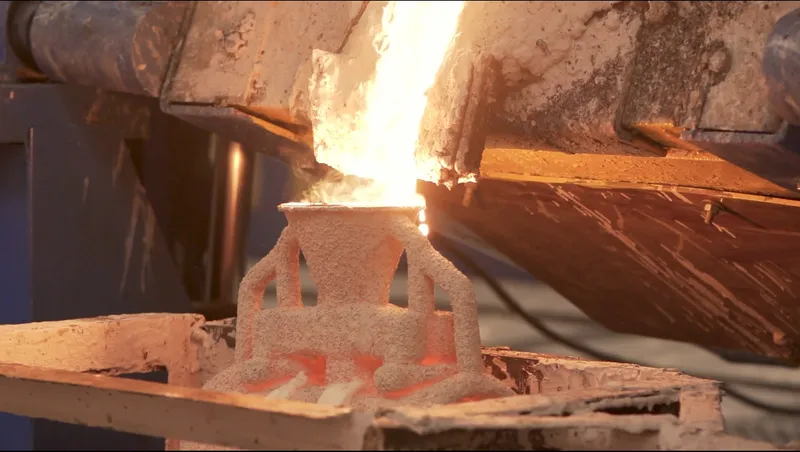
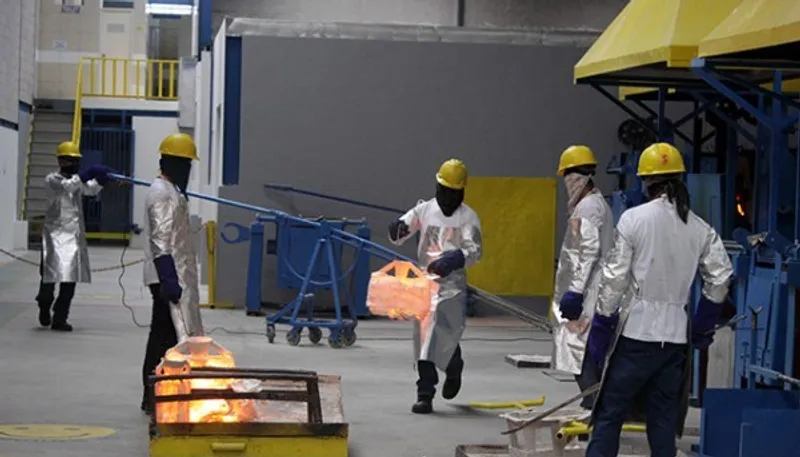
Pouring molten steel into ceramic molds is the crucial metallurgical transition in investment casting. PT ZAP employs controlled gravity bottom-pour ladles with ceramic foam filters, preheating shells above 700°C to guarantee smooth mold filling across thin 1.5mm walls without turbulent oxidation.

Key Engineering Specs:
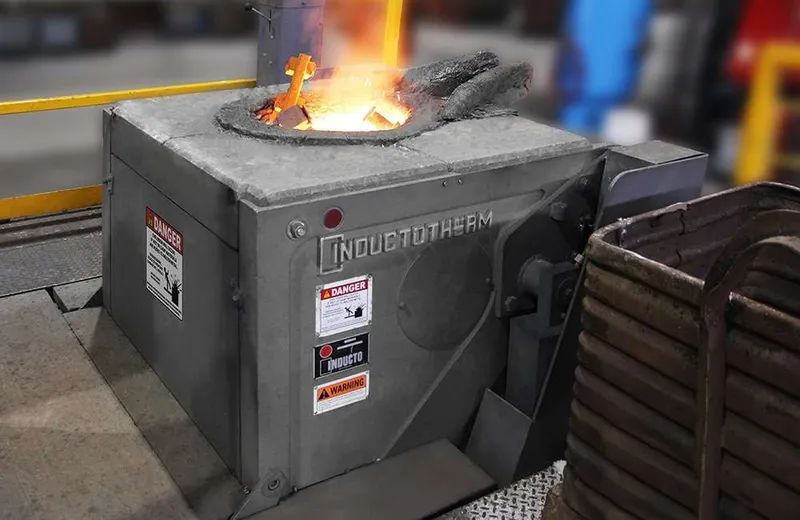
  • Inductotherm medium-frequency induction melting up to 1650°C
  • Shell preheating to 700°C–900°C in gas-fired rotary kilns
Casting Defects Analysis: Gas Porosity, Shrinkage Cavities & Prevention Strategies
Metrology & Quality
7 min read October 2021 / Updated 2026

Casting Defects Analysis: Gas Porosity, Shrinkage Cavities & Prevention Strategies

Root-cause breakdown of open vs closed shrinkage, gas solubility mechanics in liquid steel, and how directional solidification design eliminates internal voids.

Porosity and shrinkage are the two most critical defects in metal casting. Gas porosity stems from the dramatic drop in gas solubility as molten metal crystallizes, while shrinkage results from volumetric liquid-to-solid contraction. Discover how PT ZAP utilizes vacuum degassing, deoxidizers, and thermal modulus gating calculation to achieve zero-defect integrity.

Key Engineering Specs:
  • Gas Porosity vs Shrinkage distinction under radiographic and dye-penetrant inspection
  • Chvorinov-based feeder sizing ensuring Modulus(Riser) > 1.2 x Modulus(Part)
Gating System Design in Investment Casting: Runners, Risers & Ingate Modulus Calculation
Casting Fundamentals
6 min read November 2021 / Updated 2026

Gating System Design in Investment Casting: Runners, Risers & Ingate Modulus Calculation

Engineering non-turbulent molten metal flow, pressurized vs unpressurized gating ratios, and optimal sprue design to feed progressive solidification.

A poorly designed gating system introduces air turbulence, slag entrapment, and premature neck freezing. By applying hydrodynamic flow modeling and Chvorinov volume-to-area modulus calculations, PT ZAP engineers ensure smooth cavity filling and optimal feeding paths from runner tree to the heaviest casting sections.

Key Engineering Specs:
  • Non-turbulent gating ratios: 1:2:2 unpressurized fluid flow
  • Tapered sprue design preventing air aspiration and vortex formation
Steel Grade Classification for Precision Castings: Chemical Composition, Microstructure & Heat Treatment
Metallurgy & Steels
8 min read January 2022 / Updated 2026

Steel Grade Classification for Precision Castings: Chemical Composition, Microstructure & Heat Treatment

A comparative engineering guide to carbon steels (WCB), austenitic stainless (CF8/CF8M), duplex (4A/5A), and nickel superalloys under ASTM and DIN EN standards.

Selecting the optimal cast steel grade requires balancing corrosion resistance (PREN), tensile strength, weldability, and raw material cost. Explore how PT ZAP manufactures and certifies ASTM A351 CF8M, ASTM A216 WCB, Duplex 2205 (CD3MN), and precipitation-hardening 17-4PH with 100% Optical Emission Spectrometer heat-number verification.

Key Engineering Specs:
  • PREN calculation: Cr + 3.3(Mo + 0.5W) + 16N for localized pitting resistance
  • Ferrite Number (FN) control between 8–18 in CF8M to prevent hot tearing

Have a Custom Part Drawing or DFM Question?

Submit your 2D/3D CAD blueprints for a personalized DFM review and factory quotation within 24 hours under complete NDA protection.

Fast-Track Engineering RFQ

Precision Casting & CNC Machining Quotation Wizard

Receive a direct factory proposal for lost-wax casting & 100% CNC finished parts within 24–48 hours.

100% NDA Protected Strict IP & CAD Confidentiality

1 Select Target Industry & Part Application

Choose the primary operational environment for your cast component: